 comparison
How to Decide if a Private Building Inspector Is Worth It
Last Updated: October 25, 2026
Quick Summary
Hiring a private building inspector is usually worth it for complex, fast-moving or unfamiliar home builds, where a named surveyor responds quickly and keeps trades moving. For simple, unhurried domestic work, the local authority route is perfectly sound. The decision comes down to risk and programme.
- A private inspector verifies Building Regulations compliance only, not planning permission or design.
- Early appointment, before foundations are in, is where the value sits.
- Private quotes vary with scope, so confirm stage inspections and the completion certificate are included in writing.
- A new build is inspected in stages, and each stage must be signed off before being covered up.
- Without a completion certificate, selling or remortgaging the property becomes difficult.
Table of Contents
- What a Private Building Inspector Actually Does on a Home Build
- Private Building Inspector vs Local Authority: How the Two Routes Differ
- The Pros and Cons of Hiring a Private Inspector for Home Builds
- Private Building Control Costs: What Drives the Quote
- Building Control Inspection Stages for a New Build
- What Happens if Building Work Fails Inspection
- Book a Free Consultation Before You Appoint Anyone
- Frequently Asked Questions
What a Private Building Inspector Actually Does on a Home Build
A private building inspector is an approved inspector who checks that construction work meets the Building Regulations, from the first excavation to the final completion certificate. The short answer: whether hiring a private building inspector is worth it for home builds depends on what you are building, how fast you need decisions, and how much risk you can absorb.
The role is narrower than most homeowners expect. Your inspector does not design the building, manage the trades, or sign off your planning permission. They verify compliance with the technical standards that govern structure, fire safety, drainage, thermal performance and ventilation. That distinction matters, because it separates what an approved inspector is responsible for from what sits with your architect and your contractor.
A useful definition: building control is the statutory process that confirms construction work complies with the Building Regulations, and it can be delivered either by the local authority or by a registered private approved inspector.
One point worth settling early. Building Regulations approval and planning permission are two separate consents, and a private inspector only deals with the first. If you are unclear on that split, our guide on building regulations vs planning permission explains where each one applies.
Private Building Inspector vs Local Authority: How the Two Routes Differ
The two routes deliver the same legal outcome: a certificate confirming the work complies. What differs is the service around it.
A local authority building control team is the default option. You submit a full plans application or a building notice, they inspect at set stages, and they issue the certificate. Fees are published and fixed.
A private approved inspector works under a formal agreement with you rather than the council. In practice, that tends to mean:
- Faster appointment and more predictable scheduling
- One named surveyor who follows the project from start to finish
- Direct access for your builder when a detail needs clarifying on site
- A completion certificate lodged with the local authority at the end
The trade-off is that you are choosing and paying for the service directly. If you want to understand how long each route typically takes before you commit, our breakdown of how long building control approval takes sets out the real timelines for full plans and building notice applications.
Neither route is automatically better. The right choice follows the project, not the other way round.
The Pros and Cons of Hiring a Private Inspector for Home Builds
Here is where the decision actually gets made. The honest position is that a private inspector is worth the fee on some builds and adds little on others.
Where a Private Inspector Earns Their Fee
Complex or fast-moving projects benefit most. A loft conversion with a tricky structural opening, a rear extension with a steel frame, or a new build with a tight programme all create moments where a slow answer costs money. A private inspector who can respond within a day or two keeps the trades moving.
The same applies when your contractor is unfamiliar with a particular construction method. A named surveyor who will talk a detail through on site, before the work is covered up, prevents the most expensive kind of problem: rework.
A common mistake is appointing an inspector late, after the foundations are in. Early appointment is where the value sits.
Where the Local Authority Route Still Wins
Straightforward domestic work, such as a simple internal alteration or a small extension, rarely needs the responsiveness a private inspector provides. The local authority route is also the obvious choice if you are working near a boundary or a party wall and want the council's own records involved.
Cost certainty matters too. Published local authority fees are easy to compare before you start, while private quotes vary with scope. Watch out: a quote that looks cheaper can exclude stage inspections or the final certificate, so always confirm what is included in writing.
| Factor | Private Inspector | Local Authority |
|---|---|---|
| Appointment speed | Usually fast, direct agreement | Depends on council workload |
| Point of contact | One named surveyor | Rotating officers possible |
| Fee structure | Quoted per project | Published fixed fees |
| Best for | Complex builds, tight programmes | Simple domestic work |
| Certificate | Lodged with local authority | Issued by council |
Private Building Control Costs: What Drives the Quote
Private building control costs are driven by scope, not by a standard rate card. No two quotes look the same because no two projects carry the same inspection burden.
The main drivers are:
- Project value and complexity. A new build with multiple storeys, basements or unusual structural solutions needs more inspection time than a single-storey extension.
- Number of inspection stages. More stages mean more site visits and more administration.
- Travel and location. Remote sites carry a premium.
- Whether structural calculations and fire strategy documents are already in place. A well-prepared technical pack reduces the inspector's review time, which usually reduces the fee.
Pricing depends on the project. Ask for a written scope that names the stages covered and confirms the completion certificate is included. Compare quotes on that basis, not on the headline number.
Getting the building regulations drawings right before you appoint anyone is the single biggest lever on cost. That is where our building regulations service does its work.
Building Control Inspection Stages for a New Build
A new build is inspected in stages, and each stage must be signed off before the next one is covered up. Miss a notification and you can be asked to expose completed work.
The typical stages are:
- Commencement before any work starts
- Excavations and foundations before concrete is poured
- Oversite and damp-proof course before the floor is laid
- Superstructure including walls, structural openings and roof
- Insulation and thermal elements before they are concealed
- Drainage before backfilling
- Completion once all works are finished
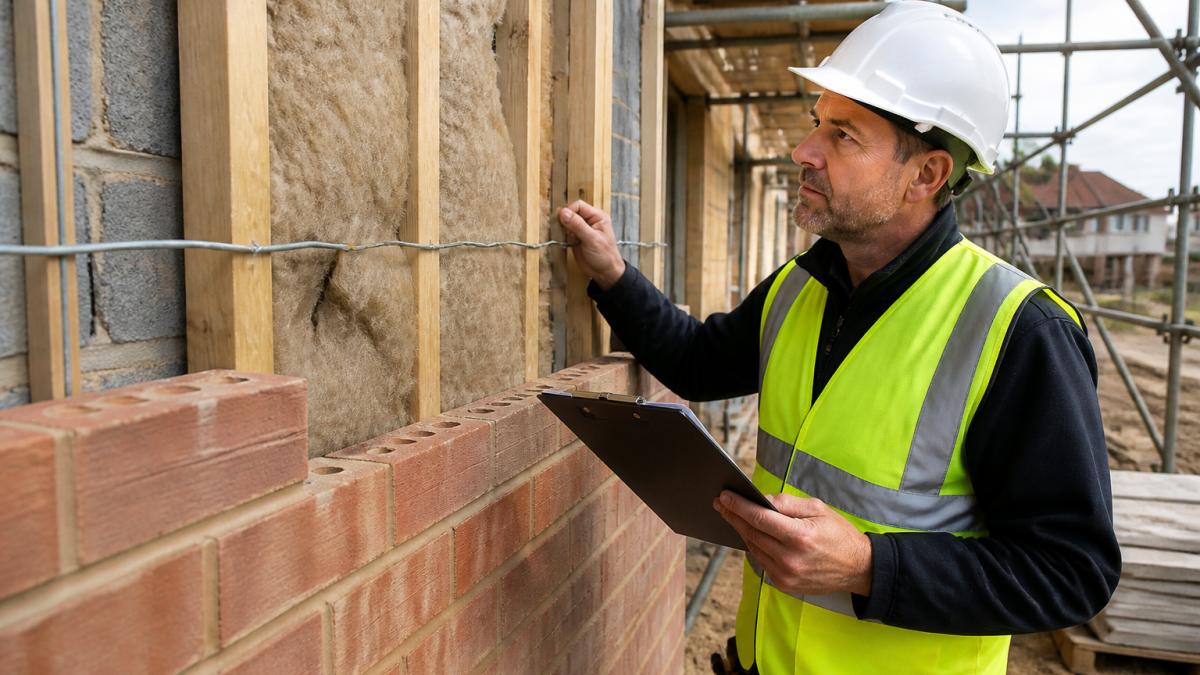
The same staged logic applies to smaller work. If your project involves removing a wall, our guide on internal wall removal and building regulations shows how approval works at that key structural stage. It is a useful concrete example of why stage notifications exist.
What Happens if Building Work Fails Inspection
Failing an inspection is not the end of the project, but it is expensive if handled badly. The inspector will issue a schedule of non-compliant items, and the work cannot proceed past that stage until they are resolved.
The usual outcomes are:
- Minor items corrected and re-inspected, often within days
- Structural or fire safety issues requiring revised calculations or remedial work before sign-off
- Work already covered up needing to be opened for inspection, which is where costs escalate
The real risk is at completion. Without a certificate, selling or remortgaging the property becomes difficult, and some lenders will not proceed. Our article on the consequences of building work done without regulations sets out what that looks like in practice, and it is worth reading before you decide to skip proper inspection to save a fee.
Most failures trace back to poor drawings or a contractor working from verbal instructions. Good technical documentation prevents far more problems than it fixes.
Book a Free Consultation Before You Appoint Anyone
The decision comes down to risk and programme. If your build is complex, fast-moving, or involves unfamiliar construction, a private inspector is usually worth the fee. If it is simple and unhurried, the local authority route is perfectly sound.
Either way, the quality of your drawings and technical pack decides how smoothly the inspection process runs. That is the part we handle at Solvers Architecture Ltd, combining planning-led design with building regulations drawings and council submission.
Weighing up whether professional oversight is worth paying for? Our guide on whether professional planning advice is worth the cost compares what you actually get for the fee before you commit.
Solvers Architecture Ltd provides planning-led architectural consultancy with building regulations drawings and council submission built into the process, giving you clarity from the outset and a scheme that is deliverable rather than merely drawn. Get started with Solvers Architecture Ltd and take your project from concept to completion with confidence.
Frequently Asked Questions
Is it worth hiring a private building inspector for a home build?
It depends on the complexity of the build and how much you value speed and direct contact. A private building inspector typically offers quicker site visits, a named surveyor you can call, and more flexibility around your programme. On a straightforward extension the difference may be small. On a new build with several inspection stages, that responsiveness can prevent delays that cost more than the fee itself. Compare quotes against the local authority before deciding.
What is the difference between a private building inspector and local authority building control?
Both check work against the Building Regulations and issue completion certificates, but they operate differently. Local authority building control is part of the council, while a private inspector works for a registered building control approver. Private firms usually offer faster response times and a single point of contact. The local authority may suit you if you want one body handling everything, or if your project is already underway with them.
How much does private building control cost?
Private building control costs vary with the size, type and complexity of the project, the number of inspection stages required, and the firm's location. A loft conversion sits at the lower end; a full new build sits at the higher end. Rather than rely on a generic figure, ask two or three approved providers for a fixed quote covering all stages, and check whether the completion certificate is included.
What happens if building work fails inspection?
The inspector issues a report setting out what does not comply and what needs to change. You or your builder then carry out remedial work and request a re-inspection. Most issues are resolved at this stage without enforcement action. If work is covered up before inspection, the inspector can require it to be opened up, which adds cost and delay. Agree the inspection stages with your builder in writing so nothing gets hidden prematurely.