 blog
5 Common Reasons for Planning Permission Refusal on Listed Buildings
Table of Contents
- Why Listed Building Applications Get Refused
- Reason 1: Harm to the Building's Special Interest
- Reason 2: Poor Quality or Incomplete Listed Building Consent Application Requirements
- Reason 3: A Weak Heritage Impact Assessment for Listed Buildings
- Reason 4: Planning Permission Refusal Examples You Should Know
- Reason 5: Ignoring the Setting and Surroundings
- How to Appeal a Planning Refusal
- Conclusion
- Frequently Asked Questions
Last Updated: 20 October 2026
Why Listed Building Applications Get Refused
A planning permission refusal on a listed building rarely comes out of nowhere. Most refusals trace back to five avoidable mistakes, and understanding them before you submit is the difference between a smooth approval and a costly appeal.
Listed building consent is the formal approval needed before you alter a listed structure. It sits alongside planning permission, not instead of it. Get one without the other and the work is unauthorised.
The stakes are real. Councils assess harm to a building's special architectural or historic interest, and they have wide discretion to say no. Below, we break down each refusal reason and show you how to avoid it. The good news: most failures are preventable with better preparation.
Reason 1: Harm to the Building's Special Interest
The most common cause of refusal is straightforward: the proposal damages what makes the building special. Councils must protect the fabric, character and historic value of a listed structure. Any alteration that erodes those qualities faces a hard fight.
Special interest covers more than the facade. It includes original materials, internal layouts, joinery, fireplaces and even the patina of age. Replacing original sash windows with modern equivalents, for example, can trigger refusal even when the new units look similar.
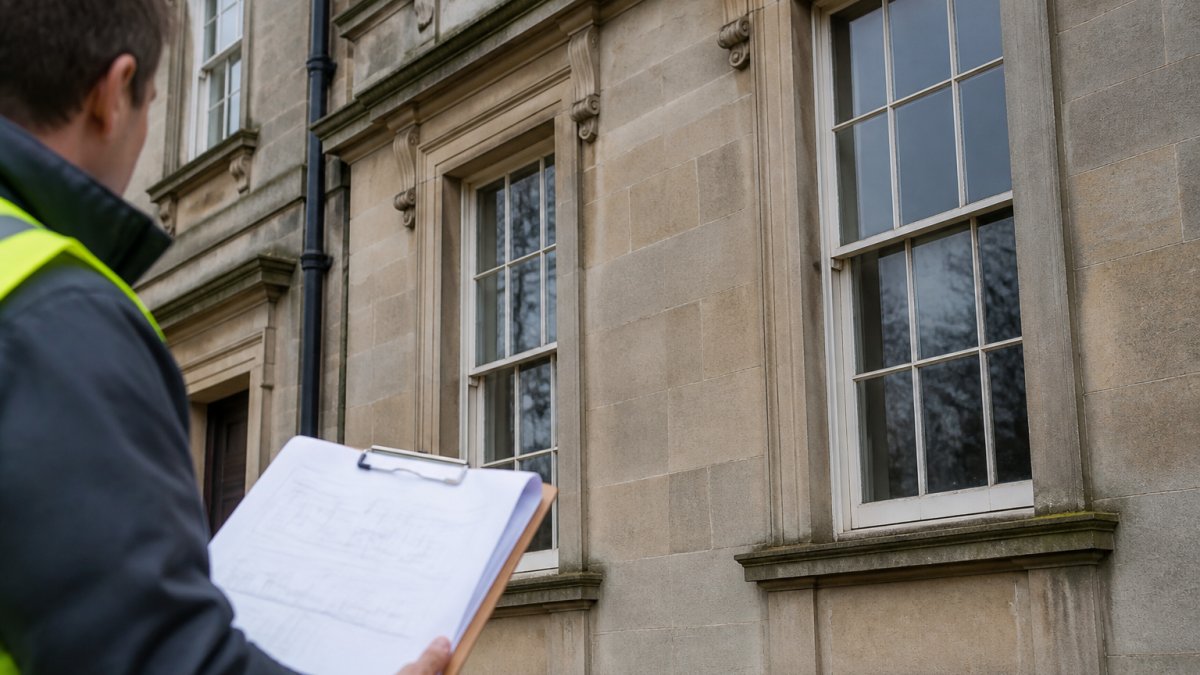
Applicants often propose changes that seem minor but remove historic fabric. A common mistake is assuming "like-for-like" replacement is always acceptable. In practice, councils want evidence that repair was considered first.
- Keep original materials wherever possible
- Justify any loss of historic fabric with clear reasoning
- Show that repair options were explored before replacement
Reason 2: Poor Quality or Incomplete Listed Building Consent Application Requirements
A weak application sinks a good project. Listed building consent application requirements are detailed, and missing documents give councils an easy reason to refuse. This is avoidable.
Applicants frequently submit drawings that lack detail, omit a heritage statement, or fail to describe materials. Councils cannot approve what they cannot assess. An incomplete submission signals a lack of care.
The core requirements typically include:
- Accurate existing and proposed drawings
- A design and access statement
- A heritage statement explaining impact
- A schedule of materials and methods
- Photographs of the current condition
Getting these right the first time saves months. Our planning permission service assists with submitting complete, council-ready packs.
Reason 3: A Weak Heritage Impact Assessment for Listed Buildings
A heritage impact assessment for listed buildings is the document that makes or breaks many applications. It explains what your proposal does to the building's significance and why that impact is acceptable. Skip it, or write it badly, and you invite refusal.
The problem is that many assessments are generic. They describe the building but fail to analyse the specific effect of the proposed works. Councils spot this immediately.
A strong assessment does three things:
- Identifies what is significant about the building
- Explains how the proposal affects that significance
- Sets out mitigation for any harm
Reason 4: Planning Permission Refusal Examples You Should Know
Learning from planning permission refusal examples is one of the smartest things an applicant can do. The patterns repeat, and seeing them helps you avoid the same traps.
Common refusal scenarios include:
- Modern extensions that dominate the historic form of a building
- Window and door replacements in unsuitable materials such as uPVC
- Internal reconfiguration that destroys original room layouts
- Insufficient detail on how works will be carried out
Each of these fails for the same underlying reason: the council cannot see how the change protects the building's interest. When you present clear evidence and sympathetic design, the outcome shifts.
Historic England's advice on listed building consent sets out the principles councils apply when weighing harm against benefit. Reading it before you design is time well spent.
Reason 5: Ignoring the Setting and Surroundings
A building's setting matters as much as the building itself. Proposals that ignore how a change affects views, neighbouring heritage assets or the wider character of an area often fail. Councils assess setting carefully.
An extension that blocks a key view of a listed church, or a new structure that clashes with a conservation area, can be refused even if the building work itself is sound. The impact extends beyond the property boundary.
- Consider views into and out of the site
- Check for nearby heritage assets
- Assess how the change reads from public spaces
At Solvers Architecture Ltd, we map setting and surroundings early, so design decisions account for context rather than reacting to it after a refusal.
How to Appeal a Planning Refusal
Knowing how to appeal a planning refusal gives you a route back after a setback. In England, appeals against listed building consent decisions go to the Planning Inspectorate. You generally have six months from the decision date to lodge an appeal, though you should confirm the current deadline on the official gov.uk guidance.
Before appealing, decide whether the refusal is worth challenging or whether a revised application is smarter. Appeals cost time and money. Sometimes resubmitting with stronger evidence gets a better result faster.
- Review the council's reasons for refusal line by line
- Gather new evidence that directly answers each point
- Consider whether a revised scheme removes the objection entirely
gov.uk guidance on appealing a planning decision explains the process and timeframes.
Conclusion
Listed building projects demand care, and a refusal usually signals a gap in preparation rather than an impossible site. Address special interest, submit complete documents, invest in a proper heritage impact assessment, learn from past refusals and respect the setting. Do that, and your odds improve dramatically.
If you have had an application refused or want to get it right first time, we can help. Our planning-led approach at Solvers Architecture Ltd combines building regulations expertise with council submission support. We offer a free consultation to review your scheme and map the route to approval. Book a free consultation and turn your plans into a deliverable project with confidence.
Frequently Asked Questions
Why might planning permission be refused for a listed building?
Planning permission for a listed building is often refused because the proposals harm the building's special architectural or historic interest. This can include altering original features, using inappropriate materials, or failing to submit a proper heritage impact assessment. Local planning authorities also consider the setting of the building and whether the works are justified. Incomplete applications or missing listed building consent application requirements are another common reason for refusal, so submitting a thorough, well-evidenced application is essential.
What is the difference between planning permission and listed building consent?
Planning permission and listed building consent are separate approvals. Planning permission deals with the use of land and the general appearance of development, while listed building consent is specifically required for works that affect the character of a listed building as a building of special architectural or historic interest. You may need both for a project. Applying for one without the other can lead to enforcement action, so check which consents your scheme requires before starting work.
Can I appeal a refused listed building application?
Yes, you can appeal a refused listed building consent application to the Secretary of State. Appeals must be lodged within the time limit set out in the decision notice, typically six months from the date of refusal for listed building consent. The process involves submitting a statement of case and supporting evidence. Getting a heritage impact assessment for listed buildings right before appealing can strengthen your case, and professional advice on how to appeal a planning refusal is recommended to avoid further delays.
How can I improve my chances of getting listed building consent?
Improving your chances starts with a detailed understanding of the building's significance. Commission a thorough heritage impact assessment for listed buildings, use traditional materials, and keep alterations to a minimum. Submit a complete application that meets all listed building consent application requirements, including drawings and a design and access statement where needed. Early pre-application discussions with the local authority's conservation officer can also identify issues before a formal decision, reducing the risk of refusal.