 ultimate-guide
Mandatory vs Additional HMO Licensing Explained
Table of Contents
- What Is HMO Licensing and Why It Matters
- Mandatory HMO Licensing: The Legal Requirement
- Additional HMO Licensing: Extended Coverage
- HMO Licence Application Process and Timeline
- HMO Amenity Standards and Compliance Requirements
- HMO Licence Fees and Duration: What You Need to Know
- Key Differences and Implications for Landlords
- Frequently Asked Questions
Last Updated: September 30, 2026
What Is HMO Licensing and Why It Matters
HMO licensing is a regulatory requirement in many areas that governs how properties can be used to house multiple unrelated occupants. Understanding the distinction between mandatory and additional HMO licensing is essential for landlords, property investors, and developers who operate or plan to operate houses in multiple occupation.
The regulatory landscape for HMOs has become increasingly complex. Local authorities across the UK have implemented licensing schemes to ensure standards of safety, management, and amenity provision. These schemes fall into two broad categories: mandatory licensing, which applies to all HMOs meeting specific criteria, and additional licensing, which local authorities can introduce to cover a wider range of properties. Getting this distinction wrong can result in enforcement action, fines, or loss of rental income.
At Solvers Architecture Ltd, we work with property developers and investors navigating these licensing requirements as part of broader HMO conversion and development projects. The licensing framework directly affects design specifications, amenity planning, and project viability. Before commencing any HMO project, you need absolute clarity on which licensing scheme applies to your specific property. If your project involves converting an existing building to HMO use, you may also require Change of Use consent and Building Regulations approval to ensure the property meets all structural and safety standards before licensing is sought.
Mandatory HMO Licensing: The Legal Requirement
Mandatory licensing applies to HMOs that meet specific thresholds established under the Housing Act 2004. A property must be licensed if it is occupied by five or more persons from two or more households and at least one person pays rent.
The mandatory HMO licensing scheme is non-negotiable. If your property meets the criteria, you are legally required to obtain a licence before letting it out. Operating an unlicensed mandatory HMO is a criminal offence that can result in substantial fines and, in serious cases, prosecution. Local authorities conduct proactive enforcement, so this is not a compliance gap you can ignore or defer.
Properties subject to mandatory HMO licensing typically include:
- Shared houses occupied by five or more unrelated tenants
- Buildings with multiple self-contained flats where the owner retains control of shared areas
- Purpose-built student accommodation in some cases, depending on local authority interpretation
The criteria are straightforward on the surface but require careful assessment. A property with four tenants does not require mandatory licensing. Add one more person from a different household, and the obligation kicks in immediately. Landlords sometimes underestimate occupancy or misunderstand household composition, leading to accidental breaches.
Mandatory HMO licence applications require submission of detailed information about the property, the management arrangements, and the landlord's fit-and-proper-person status. You will need to demonstrate that you have appropriate management systems in place, that the property meets safety standards, and that you understand your obligations as an HMO landlord.
Additional HMO Licensing: Extended Coverage
Additional licensing is a discretionary scheme that local authorities can introduce to regulate HMOs that fall outside the mandatory threshold. A local authority can designate an additional licensing scheme if it considers that a significant proportion of HMOs in its area are being managed inadequately or that additional licensing would improve standards.
Additional HMO licensing typically covers properties occupied by three or four persons from two or more households. The threshold is lower than mandatory licensing, meaning more properties fall within scope. Not all local authorities have introduced additional licensing schemes, so you must check your specific local authority's position.
The key difference between mandatory and additional HMO licensing is discretion. Whilst mandatory licensing is a statutory obligation applied uniformly, additional licensing is a local policy tool. An authority that introduces additional licensing must follow a formal consultation process and demonstrate that the scheme is necessary and proportionate. However, once introduced, additional licensing becomes a legal requirement in that area, and operating an unlicensed additional HMO is equally an offence.
Additional licensing schemes vary significantly between local authorities. Some councils have introduced them to cover all HMOs with three or more unrelated occupants. Others have targeted schemes focused on specific areas or property types. Before acquiring or converting a property for HMO use, you must verify whether your local authority operates an additional licensing scheme and what properties it covers.
The application process for additional HMO licence applications mirrors mandatory licensing in many respects. You will need to provide evidence of management competency, property standards, and fit-and-proper-person status. Fees for additional licensing are often lower than mandatory licensing fees, but the compliance obligations are equivalent.
HMO Licence Application Process and Timeline
Obtaining an HMO licence application requires systematic preparation and submission to your local authority. The process typically begins with gathering evidence about the property and your management arrangements.
Start by confirming whether your property requires mandatory or additional licensing. Contact your local authority's HMO licensing team directly. They can provide definitive guidance on your specific property and occupancy situation. This step is non-negotiable; proceeding on assumption rather than confirmation is a common error.
Once you have confirmed the licensing requirement, prepare your application documentation. You will typically need to provide:
- Proof of ownership or management rights
- Detailed property plans and floor layouts
- Information about the proposed tenants and occupancy arrangements
- Evidence of your fit-and-proper-person status (typically references, background checks, and declarations)
- Details of your management arrangements, including maintenance, repairs, and tenant communication
- Proof of appropriate safety certification (gas, electrical, fire safety)
- Evidence that the property meets space and amenity standards
The timeline from application submission to the licence being issued typically ranges from 4 to 8 weeks, though this varies by local authority. Some councils process applications more quickly; others have significant backlogs. Submit your application well in advance of your intended letting date to avoid delays.
Common delays in the application process include incomplete documentation, missing safety certificates, or queries from the local authority about management arrangements. Engaging a consultant or architectural practice familiar with HMO licensing, such as Solvers Architecture Ltd, can accelerate this process by ensuring your submission is comprehensive and compliant from the outset.
HMO Amenity Standards and Compliance Requirements
HMO properties must meet specific amenity standards that ensure adequate facilities for all occupants. These standards cover kitchen facilities, bathroom provision, sleeping accommodation, and common areas.
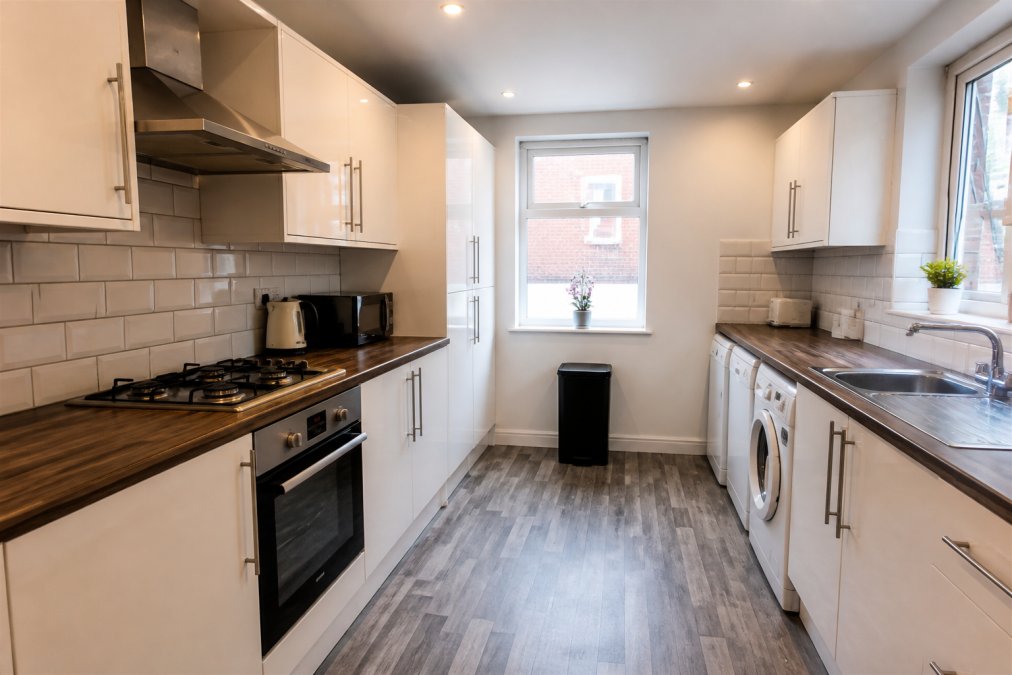
Kitchen facilities must be adequate for the number of occupants. Typically, one kitchen is required for every five occupants, though this can vary by local authority. The kitchen must include sufficient cookers, sinks, refrigeration, and worktop space for all residents to prepare meals simultaneously without undue congestion. Undersized or inadequate kitchens are a common reason for licensing applications to be refused or subjected to conditions.
Bathroom provision must meet prescribed ratios. Most local authorities require one bathroom (toilet, washbasin, and bath or shower) for every four occupants. Additional toilets and washbasins may be required depending on occupancy. These facilities must be distributed throughout the property to avoid bottlenecks and ensure reasonable access.
Sleeping accommodation must provide adequate space. Each bedroom must meet minimum floor area requirements, typically 7.5 square metres for a single room and 10.5 square metres for a double room. Bedrooms must have adequate natural light and ventilation. Attic rooms, basements, and other unconventional spaces are often rejected if they do not meet these standards.
Fire safety is non-negotiable. The property must be equipped with appropriate fire detection and suppression systems, emergency lighting, and clear escape routes. All escape routes must be maintained free from obstruction. Furniture and fittings must meet fire safety standards. Local authorities will require evidence of fire risk assessment and compliance with the Fire Safety Order 2005.
Common areas such as hallways, stairs, and shared lounges must be maintained to an appropriate standard. These areas must be clean, well-lit, and adequately ventilated. The property must be managed to prevent accumulation of rubbish, pest infestation, or other hazards.
HMO Licence Fees and Duration: What You Need to Know
HMO licensing involves fees payable to the local authority. These fees vary significantly by location and licensing scheme type.
Mandatory HMO licence fees typically range from several hundred pounds to over a thousand pounds per licence, depending on the local authority. Some councils charge a flat fee; others charge based on property size or occupancy. A few local authorities charge per tenant, which can make the fee substantial for larger properties.
Additional licensing fees are often lower than mandatory licensing fees but remain significant. The fee structure varies considerably by council. Some charge a flat rate; others charge based on the number of occupants or property characteristics.
The licence duration is typically five years for both mandatory and additional licensing. After five years, you must apply for renewal.
Key Differences and Implications for Landlords
The distinction between mandatory and additional HMO licensing has practical implications for property management, compliance, and investment planning.
Frequently Asked Questions
What is the difference between mandatory and additional HMO licensing?
Mandatory HMO licensing applies to properties with five or more occupants from two or more households. Additional HMO licensing covers smaller HMOs (three to four unrelated occupants) in areas where local authorities have designated additional licensing schemes. The key difference is the threshold for occupation and the geographic scope, mandatory licensing is national, whilst additional licensing is area-specific and determined by individual councils.
How do I know if my property requires an HMO licence?
Your property requires mandatory HMO licensing if it has five or more occupants from two or more separate households. Check with your local council to see if additional licensing applies in your area, this typically covers three to four unrelated occupants in designated zones. Contact your local authority's private housing or HMO licensing team directly for confirmation, as criteria vary by location.
What are the main HMO amenity standards I need to meet?
HMO amenity standards include adequate kitchen facilities, accessible bathrooms and toilets, proper waste storage, heating and hot water provision, and structural safety compliance. Each occupant must have access to sleeping accommodation of sufficient size. Standards also cover fire safety measures, electrical safety, and damp prevention. Your local authority will provide a detailed checklist during the application process, and standards may vary slightly between regions.
What happens if I operate an HMO without a licence?
Operating an unlicensed HMO is a criminal offence. Landlords face substantial fines of up to £20,000 per offence, potential prosecution, and enforcement action from the local authority. The council may issue a Prohibition Notice, preventing you from letting the property. Additionally, unlicensed operation undermines tenant protection and can damage your reputation as a landlord. Always ensure your property is properly licensed before letting to multiple unrelated occupants.